What was beer in Washington, DC like 136 years ago? In 1889 it was primarily pale lager, though there were also ruby and dark lagers being produced, among other beer styles. I dropped a few thousand words on one of these dark lagers, Culmbacher, a few years ago. Two blocks from H Street NE there was what we would consider quite a large brewery. Today, the Stuart-Hobson Middle School sits on the site of the old Washington Brewery Company. From 1873 to 1890, George Juenemann, a Prussian immigrant, dubbed it the Mount Vernon Brewery and Pleasure Garden. The brewery used George Washington’s likeness in its ads. Was tying the NE brewery to Washington’s historic home a savvy bit of marketing? Maybe!
So why this focus and why now? I’ve been trading emails with the folks at Henceforth, thanks to Brandy Holder, my fellow DC Beer co-owner. Last month, their founder and managing partner Michael Spinello said he wanted to find out more information about the Washington Brewery Company. Rather than simply email back, I figured I’d do a bit of digging and post some findings on local beer history here. After all, what good is public history if it is not made public?

In 1889, the Wash. Brew. Co., then known as The Mount Vernon Lager Beer Brewery and Pleasure Garden, produced over 36,000 barrels of beer. That is more than double DC’s largest producer, Other Half, which brewed about 16,000 barrels last year. Wash. Brew. Co./Mount Vernon Lager Beer Brewery and Pleasure Garden produced roughly 72,000 kegs-worth in DC in 1889; today Other Half DC is doing around 32,000 kegs worth of beer production.
The Washington Brewery Company no longer exists, it closed in 1917 when Prohibition came early to the District of Columbia. But the site was a brewery for nearly six decades, from 1858 to 1917, and for a chunk of that time, also a beer garden.
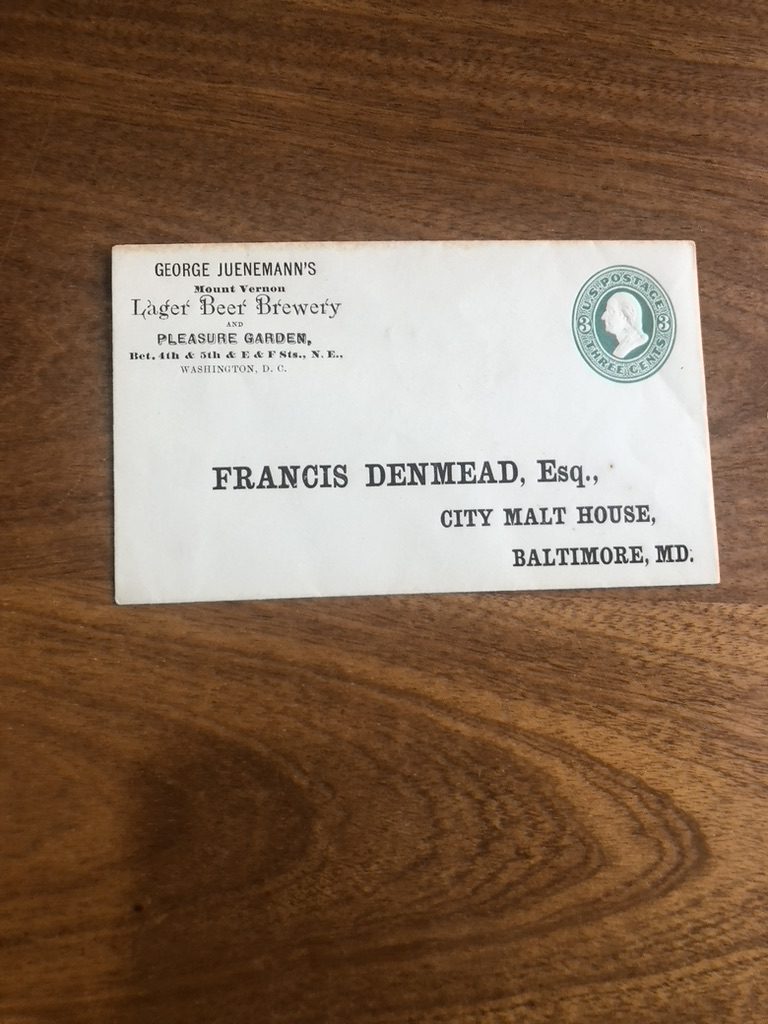
This envelope is what appears to be a remittance note from the Mount Vernon lager beer brewery to the Baltimore maltster, Francis Denmead. This letter is in the Juenemann collection at the The Historical Society of Washington, D.C.
According to the 1901 publication, 100 Years of Brewing, Francis Denmead was floor malting in Baltimore in 1904: “Denmead established a malting business in Baltimore, Md., which is now, in its greatly enlarged form, conducted by the Denmead Malting Company… The capacity of the house, which was 100,000 bushels, was doubled in 1879, the present output being 200,000 bushels, which is sold almost entirely to local brewers. It is the only malt house in the city not connected with a brewery, and is conducted on the old floor system, but has the latest improvements in patent kilns and in barley and malt cleaners.”
While we don’t have a date stamp for this envelope, we believe, Juenemann was using floor malt with barleys malted in Baltimore. This is in contrast to other local lager brewers at the time who were using malt from Canada.
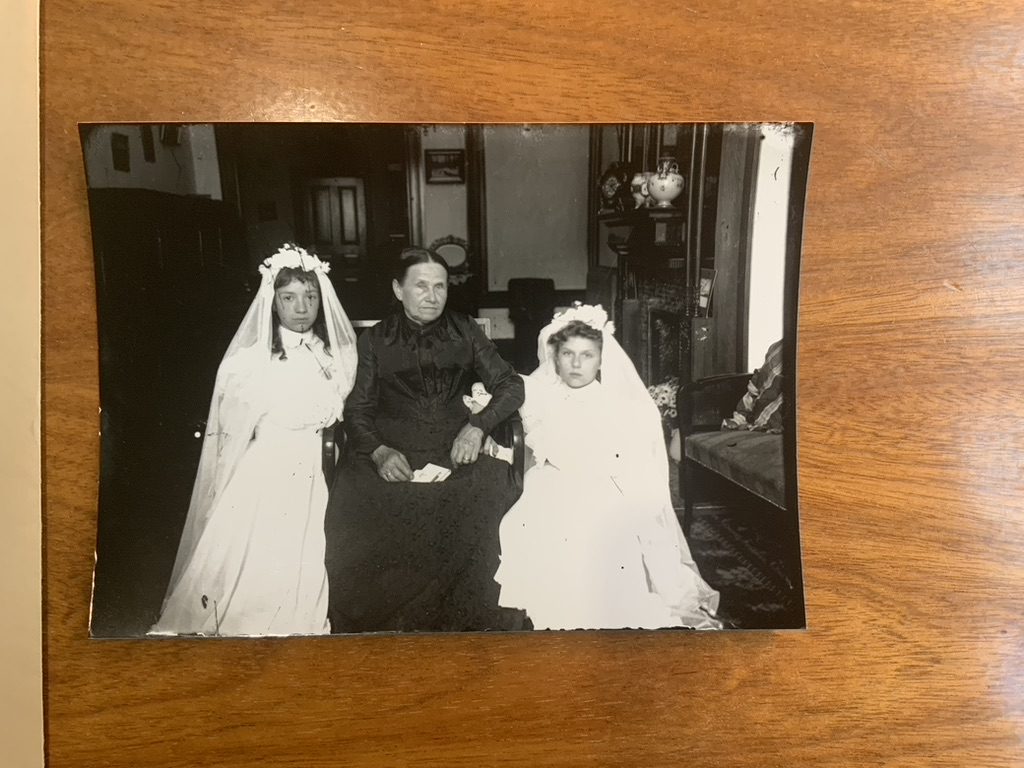
According to historical sources, the predecessor to The Wash. Brew. Co. was Albert Carry. Carry is the link between Juenemann and Wash. Brew. Co. and two of his beers, Capuciner and Champagne Lager, were analyzed in 1889.
If we believe an Evening Star article from 1889, we find Capuciner and Champagne lager were fairly zippy. These beers were analyzed by “prof. Fristoe,” a professor of chemistry at Columbian University, a precursor to George Washington University. These beers were listed at 4.7000 alcohol by weight or 5.87000 alcohol by volume. At 5.87% ABV, that’s a good bit stronger than the pale lager that was being brewed down the road in Alexandria.
Of course there is a bit of history’s mysteries here. In the ad, the analysis lists an “original gravity of wort” of 1.051 and a “specific gravity” of 1.011. If you use these metrics in an alcohol by volume calculator, you wind up with a beer that is 5.25% ABV. So while I have yet to definitively determine the meaning (or clerical error) of this historic analysis in this 1889 advertisement, one thing is clear. Even if the beer was 5.25% instead of 5.87% ABV, it was still stronger than the lager coming from a bit south in Alexandria.
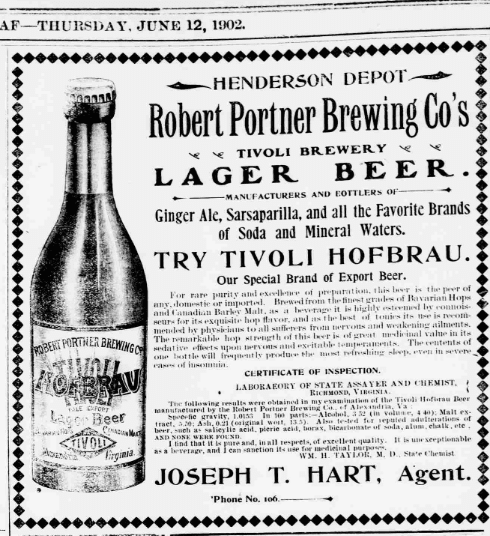
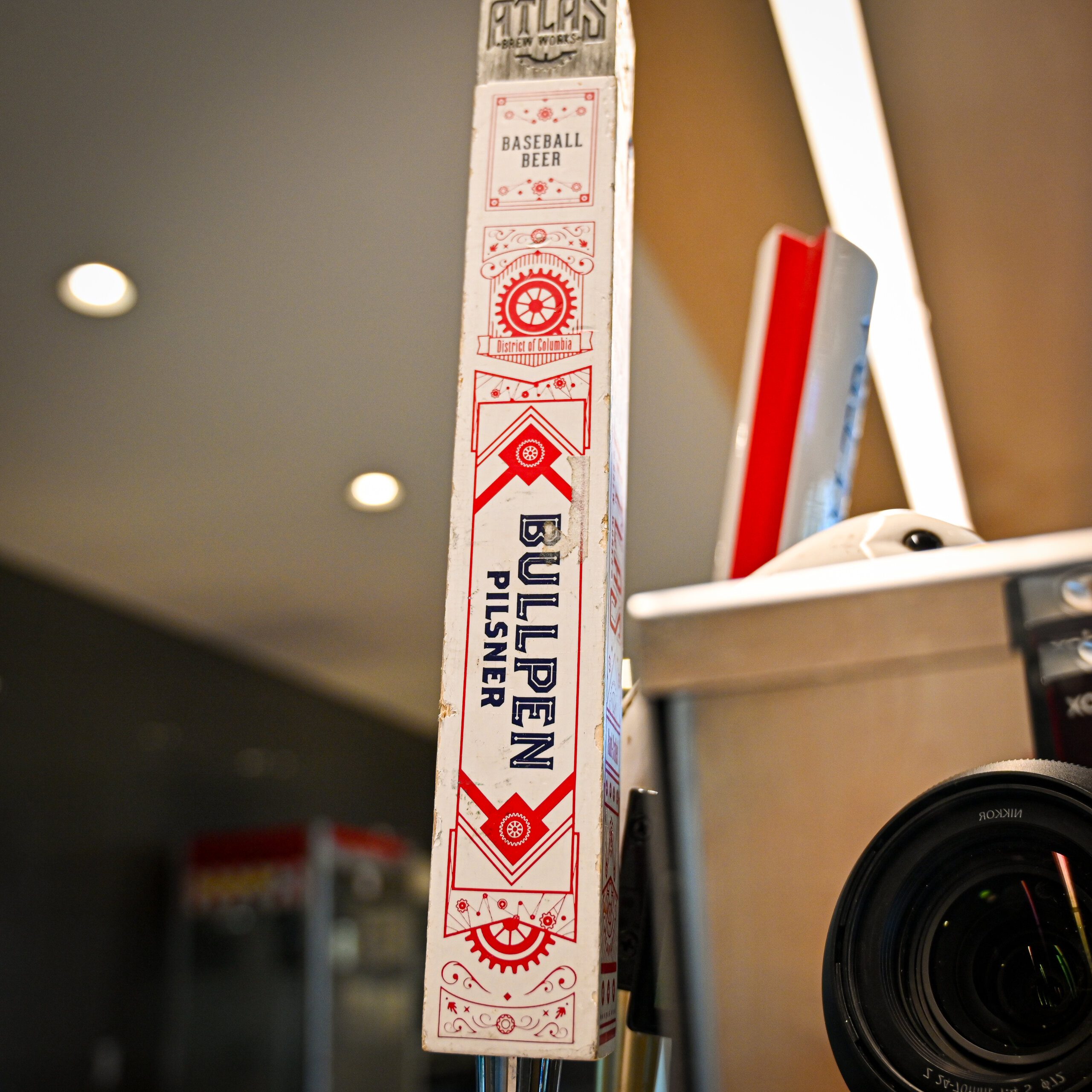
Thanks to a 1902 advertisement we know exactly what malt and hops the Robert Portner Brewing Company of Alexandria was using and how strong their lager was. Advertised as a “special brand of export beer,” Tivoli Hofbrau, Portner’s export beer, was brewed with Canadian barleys and Bavarian hops. The pale lager Portner produced was an “export” per the brewery, though only 4.4% alcohol by volume. Its specific gravity of 1.015 gives us further insights into the beer and helps us compare it to modern beers. For example, the World Beer Cup winning Atlas Brew Works Bullpen Pils finishes at 1.008 final or specific gravity.
At 4.7% ABV, Atlas’ Pilsner is a bit stronger than Portner’s 4.4% pale lager. We don’t have the International Bitterness Units of the historic Tivoli Hofbrau. In 1902, the IBU scale hadn’t even been invented yet. We do know that Portner used Bavarian hops, whereas Atlas uses American.
In short, we don’t know entirely how the beer that was brewed two blocks from H street tasted. But we do know that Juenemann was using malt from the City Malt House in Baltimore and that that malt was floor malted. We also know that Portner’s brewery in Alexandria was using Canadian malt in 1902. This has a nice historic overtone today, whereas the Atlas brewers in DC are using American malt and Alexandria brewers at the Port City Brewing Company are using both Canadian and American barleys and wheat. And some Czech floor malts as well.
The next time you’re on H Street or walking by Stuart-Hobson Middle School, remember there used to be a brewery making over 36,000 barrels of beer there!