Please welcome Andy MacWilliams back to the site. He previously wrote about London.
Deirdre and I land separately at Fiumicino International Airport in Italy early on a Friday morning. I’ve been in Europe for work for a few weeks but she is coming on a red-eye from Dulles. With just 60 hours in Rome ahead of us, she makes sure to sleep on the plane so we can hit the ground running.
We spend the early part of Friday doing the touristy stuff in the Historic Center; the Pantheon, a selfie at the Trevi Fountain. We march up the Spanish Steps and hide out in Trinità dei Monti during a downpour. As we trek back to our hotel in Travastere, we stop into Open Baladin. Birrificio Agricolo Baladin opened their doors in 1996 in Piedmont and has a capacity roughly the same size as DC Brau or Tree House Brewing (45,000 barrels annually), making it one of the largest craft brewers in Italy, and a well-known one.
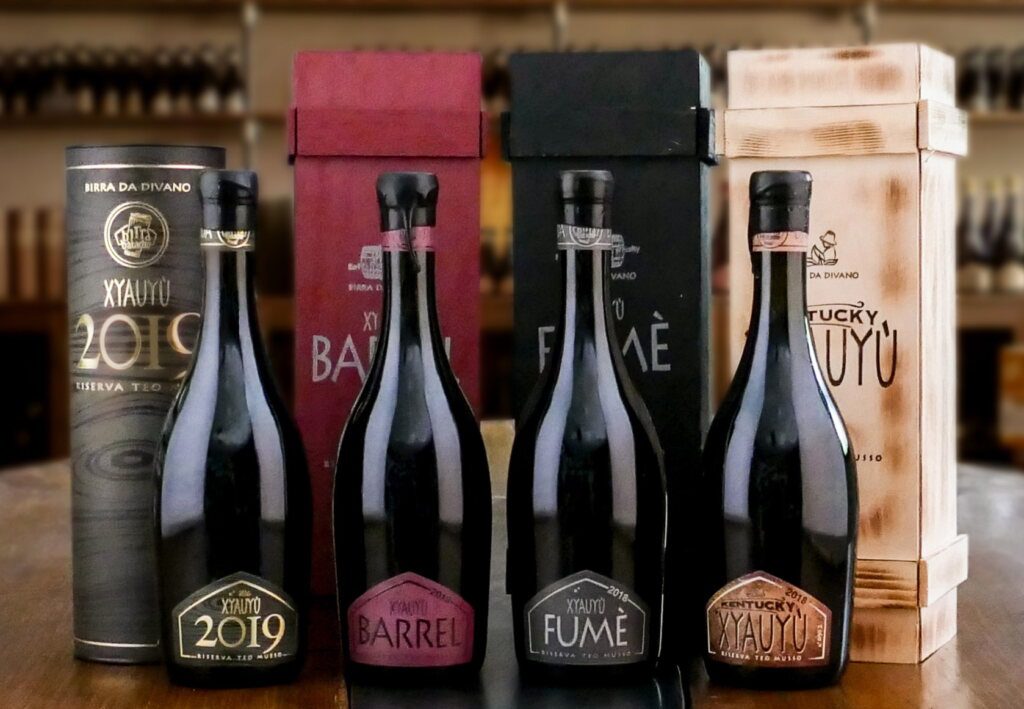
Open Baladin is their Rome based taproom, carrying 15 of their beers on tap, plus 10 guest taps and plenty of options in bottles and cans. Like Brau and Tree House, beer isn’t the only product Baladin produces. The menu is speckled with their own RTD cocktails and amaros. We start with half pints of Open Baladin 2024 and Porta Bruciata’s Red Oast. Both are thirst quenching, but not something you’d double back to. For a second round, we do short pours of Baladin Brune and Sieman’s Rive Rosse. Brune is an Italian take on a dry stout and it fills us after a light lunch. The Rive Rosse is a revelation. Brewed with 100% spontaneous fermentation then aged 2 years in oak with Tai Rosso grapes, it bursts with berries, Kool-Aid and Fruit Roll Up. The lemony, acetic base holds up to the grape and it finishes dry and tart with some salinity. It stands up to some of the better lambics out there. I also sneak in a 10cl pour of Baladin’s Xyauya Kentucky barre, Baladin’s barleywine series that’s typically served still and at room temperature. Barleywine lovers are the only ones who will get it; the nose has the sticky brown sugar and caramel you expect from both a barleywine and a bourbon. It’s hot and boozy, reading more like it’s from Porto than Louisville. This stuff doesn’t get distributed, so I’m happy to try a tipple.
We cross the Tiber back into Travastere and we’re on the hunt for an aperitivo. We find what we’re looking for at Il Vicola Da Tony. Aperitivo is an Italian tradition, calling it happy hour would be reductive. At most establishments, you get a drink and a plate for 8-10 euros. The beer options are… not perfect, but the pairing makes up for it. I get a dry, crisp pint of Moretti and the “piccolo”, which means “small plate.” Deirdre gets the bruschette with her Aperol spritz. The small plate is more than I would typically eat for lunch, piled high with salami, cheese and olives. Deirdre’s bruschetta is two massive slices of Italian bread, each topped with a fist sized serving of chopped tomatoes and basil. We easily push dinner off by an hour or two.

Our late dinner is at Osteria Der Belli, also in Travastere. We split a lovely bottle of Sicilian rose, which goes well with everything: the grilled octopus starter, seafood pasta, and rockfish in red sauce. On the walk back we duck into the crown jewel of Rome’s beer scene. Ma Che Siete Venuti A Fa’ may well be one of the best beer bars in the world. The name of the bar translates to “What have you come here for?,” a rhetorical question. Sixteen taps isn’t a ton, but what isn’t well-curated Italian craft is best-in-show import (Schlenkerla Helles, La Rulles Tripel, etc). The bar is heaving with people nightly and the tap list is routinely turning over, even during a single evening. The bottle list is where you’d go broke though: exclusive pastry stouts from 3 Sons in Florida, undistributed bottlings from Hill Farmstead in Vermont, bottle-only Italian barleywine, and imperial stout. And lambic. Lots of lambic. A list of Cantillon and 3 Fonteinen that would make Greg Engert blush.

We sample a few from Italian breweries I’ve never heard of; Hilltop, Vento Forte, Ritual LAB. All are very nice. The selection at Ma Che is impeccable. But with only so much time, I shoot my shot on a Cantillon bottle. With more than 17 Loons to choose from, this takes a moment. Many of these are bottles I’ve never even seen on a menu outside of their Brasserie. I land on the Nuit Bruxelloise, a lambic blend with Alicante Teinturier grapes. It’s flawless, huge old world wine and plum jam. An earthy character comes out and their barrels shave off any rough edges. It’s funky, dry and long. I’m beyond satisfied with the selection.
Saturday we set out to conquer one of the two big tourist attractions in Rome: the Colosseum. The ticket to get in also covers access to Palantine Hill and the Forum. With time to kill until our scheduled Colosseum entry time, a funny thing happened on the way to the Forum. Seriously. We stumble upon the Campagna Amica market on the south side of the Forum, open only Saturdays. It appears to be dedicated to organic and bio-dynamic farmers and producers. Tucked into the corner is Birrificio Artigianale Maiella. The owner and brewer pours his own plastic cups and proudly shows off pictures of the fields of grain that produce the amber and the hemp plants used in his lager. It’s not quite noon but both beers are refreshing. Who needs another espresso?

In the opposite corner is the Birra Alta Quota truck serving 5 of their own on tap. The Omid catches my eye. It’s style agnostic, dark like a brown ale with grain character from the roasted farro, like a saison. Brown ale with some panache. Chewy and sweet and dangerously drinkable at 7.2%. We close out with a bottle of Paradiso Perduto by Predio Potantino. Predio must be as nano as they get: there are only 26 total check-ins on Untappd. The grainy saison pairs very nicely with the porchetta sandwich procured around the corner. After splitting 4 beers and some fatty pork, we head out to be tourists for a few hours.
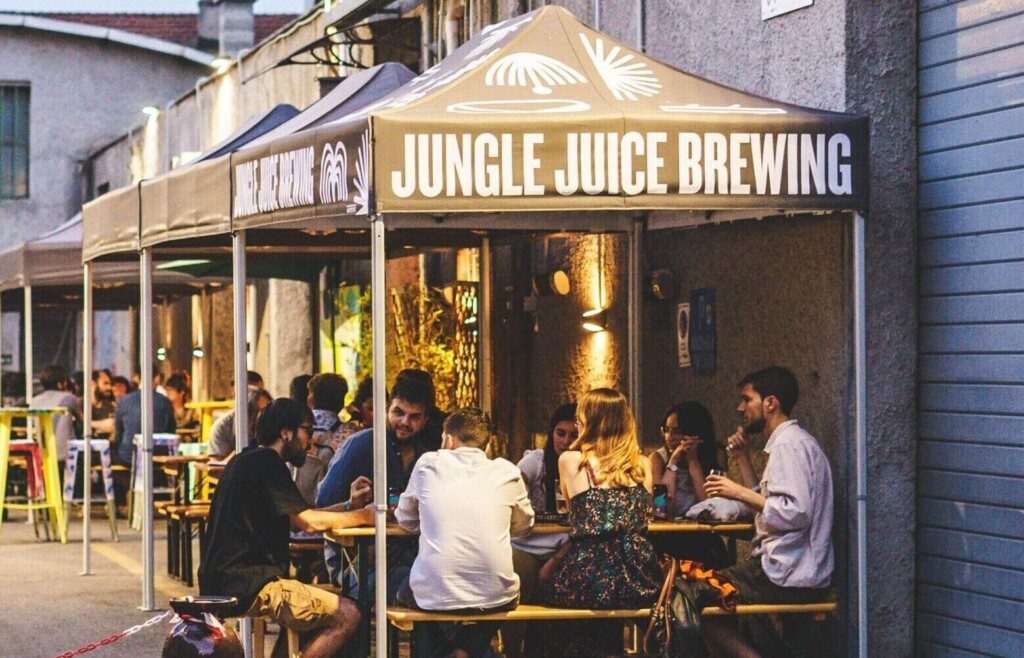
We take electric scooters back over the river to near our hotel in search of an aperitivo before going out for the night. Walking through the sunlit streets of Travastere, I spot a bunch of stickers with a lit tap menu behind the opening. They also advertise a Paloma, which catches the attention of my companion. Traditional aperitivo comes with food, but you’d never eat at Mr. Brown Pub, a classic dive in the best sense of the word. Feeling adventurous having survived a scooter ride in Roman traffic, I order the Dentistretti Tripel from Jungle Juice Brewing in Rome. It’s served in a frosted mug, but otherwise checks boxes: notes of candy, tropical fruit. It’s a fun way to start an evening. We’re headed to dinner, but there are 5 or 6 items on this tap list I hadn’t seen elsewhere.
Off to Campo de Fiori to wait in line at Osteria da Fortunata, from one of those Instagram stars that has become so popular they’ve opened a second location less than a block away. Both establishments have 90-minute waits. We decide to hedge our bets and each wait in one of the lines and then signal each other when someone gets close. As I wait, I think about the state of craft beer in Italy.
Italians are not especially enamored with beer. And certainly not craft beer. Italy is barely in the top 50 of countries in terms of beer consumption, with an estimated 37 liters of beer consumed annually per capita. Putting that in perspective, that’s roughly half the per capita consumption for an American and a mere quarter of what an average Czech throws back annually. Even within Italy, craft beer represents less than 7% of all beers in the market. In the US beer market, craft represents 13% by volume sold. Yet the craft scene is alive and well. Having been to more than 80 countries and having sought out craft beer in all of them, the Italian scene seems dialed in. Sure, I avoided the obvious potholes, like the one or two smoothie sours I saw on menus. As I reflect on everything I sampled, only one item was bad. Everything else was either true to style or uniquely Italian. Most offerings honored tradition, even the new school traditions. Those that didn’t felt like they embraced the unique agricultural ingredients Italy has to offer. I suppose I’m slightly impressed.
Very few things are truly worth the wait, but Fortunata is. Deirdre has the classic ragu while I get one of the dishes they are known for, carbonara. Savoring a bite of mine, Deirdre wonders what makes the carbonara so creamy, which I assume is roughly 17 egg yolks. We order a bottle of Valpolicella Ripasso to which the waiter raises his eyebrows and says, “very good choice.”
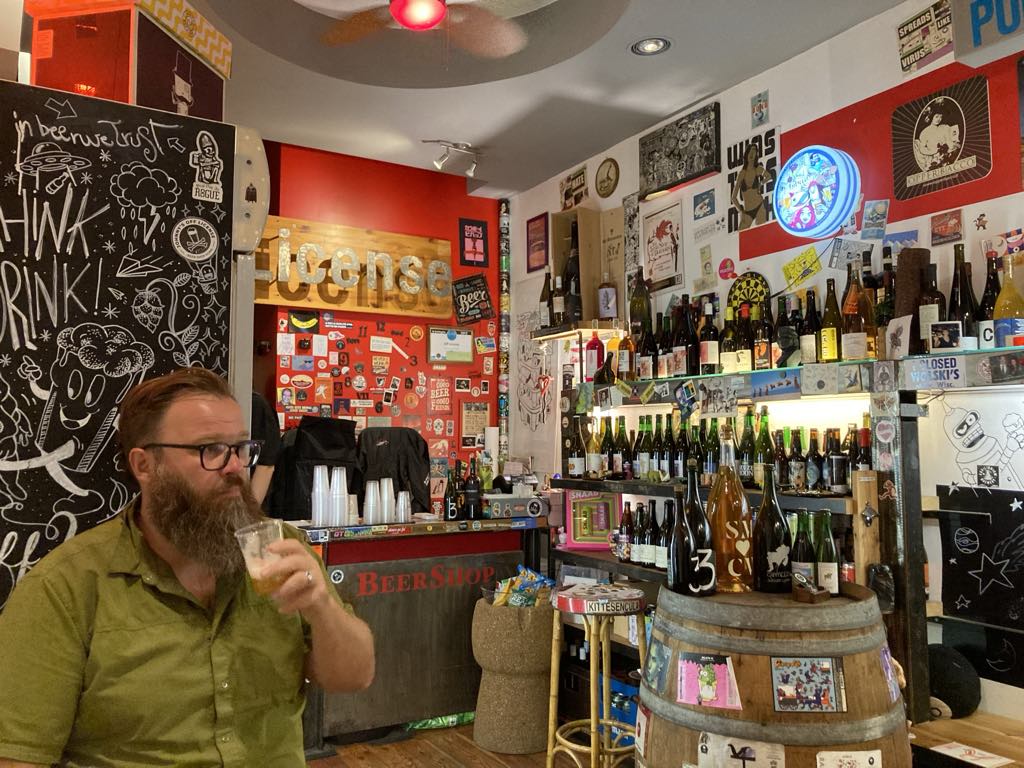
Campo de Fiori is also home to Johnny’s Off License, a bottle shop with enough seating to hang out in but not quite a bar. We talk with the owner, Vincenzo, who tells us he has 200 craft beer labels in the coolers, the majority of which are Italian, and that the inventory changes every two weeks. Roman craft beer drinkers want variety–see, we’re not so different after all. We start with a pair of 10oz cans from Oppercacco, a Pils and a New Zealand IPA. Both are very drinkable.
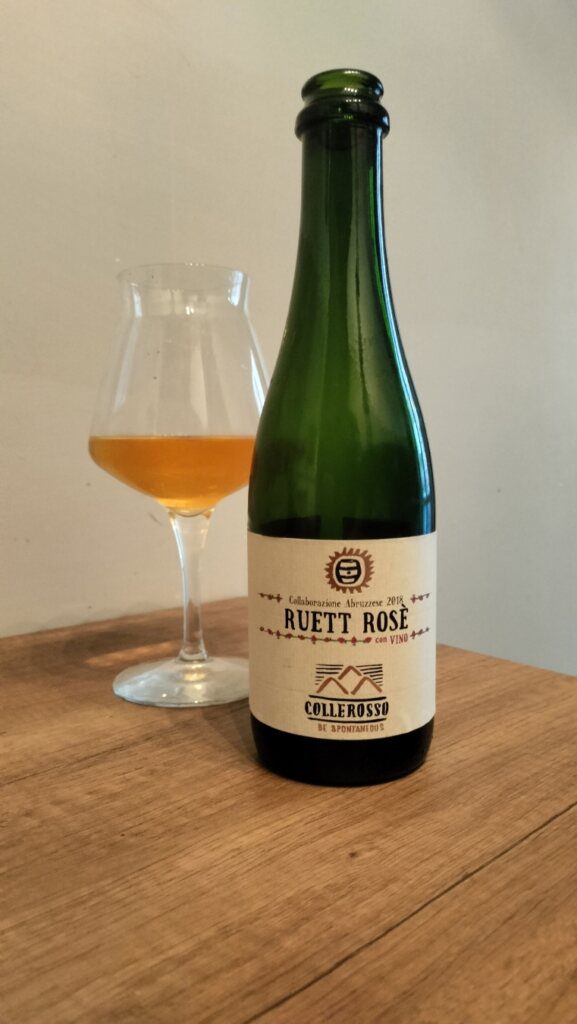
A group of Irish tourists debate between two different bottles. I offer to split with them and they are happy to oblige. They pick up a bottle of Cantina Giardino Bisiwii and I grab the Collerosso Ruett Rose. Cantina Giardino is a vineyard that has recently been collaborating with Cantillon and you can feel the influence. A blend of both white grapes and apples, this sparkling cider also has a little bit of barley in the mash. It’s bright and funky, with both the grape and the tart apple shining. It’s dry, funky with a little bit of lingering oak. It’s the kind of cider Jean Van Roy would drink. Vincenzo proudly says what Ma Che is to draft beer in Rome, Johnny’s is to canned beer. He’s not wrong. I scoop up a bunch of things to go (some to be seen at a future DC Beer share).
Sunday we do a bunch of local things and avoid beer until dinner. We hit the secondhand market at Porta Portese which is something between a flea market and a bazaar. After that, we spend the afternoon at a Roman bath, highly recommended. In the evening, we go for pizza at L’Elementare in Travastere. The wait at 7pm is at least 90 minutes. No issue for us, Ma Che is on the same block. We park our butts on a ceramic planter outside and I have a pint of Cal from Vento Forte, an 8% West Coast IPA that mostly hits the marks. It’s dry and bitter, but there is a bit of new school tropical fruit hanging out. Can you make a classic west coast with Citra, Galaxy and Mosaic? Either way, it’s a good attempt. Over excellent pizza, we share a dry stout called Dusk from XO Birra and another westy from Lariano called Park. We bumped into a few nice dark beers in Rome and Dusk nearly falls into that category despite not being exactly dry. Lariano Park is one of the better beers of the trip. Crisp, and bitter with a grassy and soapy punch. Feels like there may be some corn lurking, but a number of things we’d tried had non-traditional grain bills that seemed to work. This is very well made and another producer I’d never heard of before.
No beer on Monday, just a lovely cappuccino before we head off to the airport. We land at Dulles in the mid-afternoon and are in the front door with plenty of time to make dinner. Rome proved to be an excellent destination for a long beer weekend. Good food and plenty of culture but you didn’t come here to read about that. Rome has a lively and active beer scene. Italian producers, often overlooked, have hit their stride with both popular styles and uniquely local creations. It should come as no surprise though, as they often say out at Russian River, “it takes a lot of great beer to make great wine!”