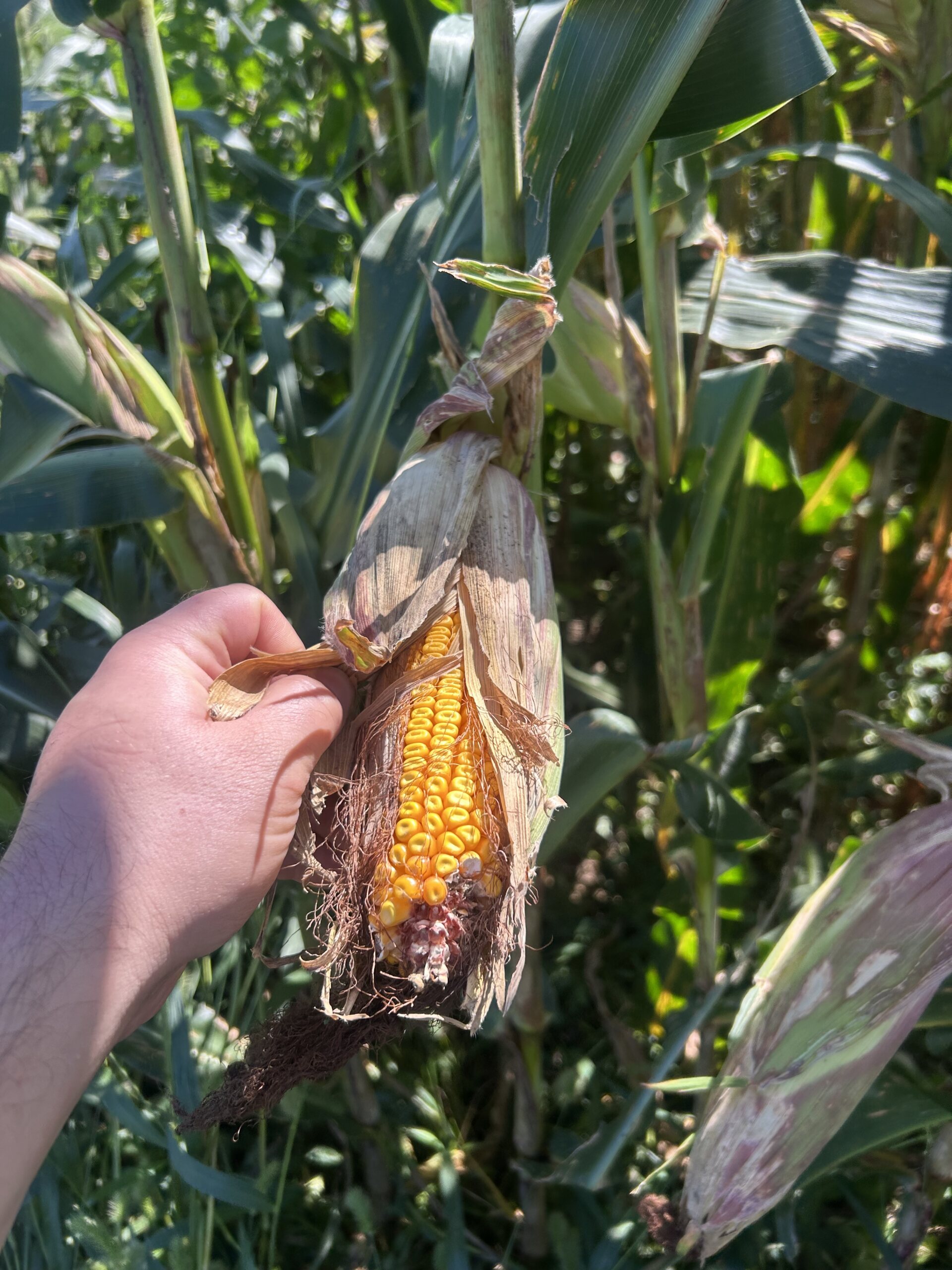
“It’s almost mild season,” Brian Delaney says, the other Manor Hill Brewing employees nod their heads in agreement. We are standing 10 yards from a cornfield, and the stalks are a few feet taller than me. We are discussing other grains, however; golden naked oats, spelt, and the superiority of pale chocolate malt. It feels appropriate to be talking malt, barleys, oats, and grains at Manor Hill. The farm brewery is the largest in Maryland and Howard County’s first.
Daryl Eisenbarth is mentioning how much he loves DRC, double roasted crystal, a malt that is as tasty to eat out of hand as it is to brew with. We move on to the somewhat secret subtle strawberry flavor that comes out of Mild Manor’d, their Amber mild that reads “Amber Ale” on the can. Eisenbarth thinks it’s the oats. Delaney is in agreement with the perceived character the grains provide the beer.
Mild Manor’d’s mission is to straddle the line between English mild and American amber styles of beer, says Delaney. Mission accomplished. He would know, as he’s been at the brewery for over a decade. In fact, he was there before the brewery existed, though at the Victoria Gastropub in Columbia. The restaurant is part of the same ownership team behind the Manor Hill farm brewery.
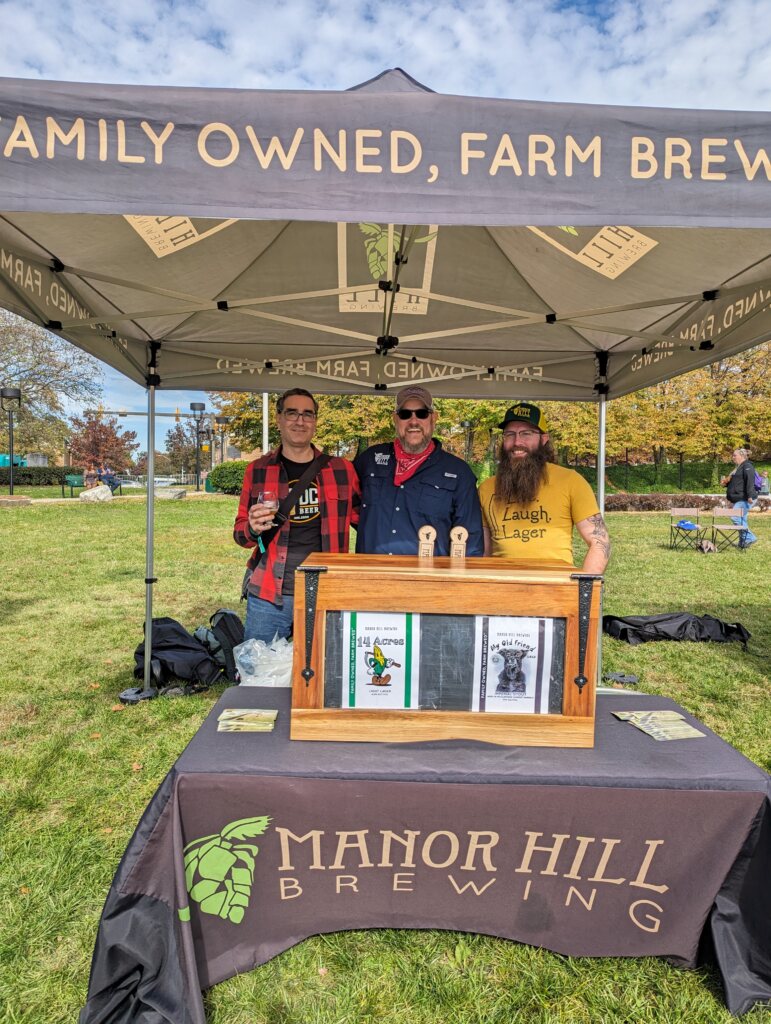
I have come to the farm to see Brandon “Millhouse” Miller, long time area brewer, and for a shorter time, District brewer, having helped 3 Stars navigate their way to building a brand in DC. Prior to that, he spent several years at DuClaw Brewery in Maryland. He had recently come back from a Pennsylvania fishing trip, “floating his fanny in the Susquehanny,” as we used to say as college kids in central PA.
As we stand at the beer wagon adjacent to the corn field on the Manor Hill property, we are enjoying a Manor Lite, a light lager with very little corn in it. Lately I’ve been observing a trend of more and more brewers brewing light lager void of corn and rice. But hey, if the Czechs can brew their 3.8-4.4% alcohol by volume pale lagers void of corn, why can’t you? Well if you’re Manor Hill you can’t because every batch they’re brewing features a dash of farm-grown corn. Some grists are as low as 5% and some as high as about 30% corn.
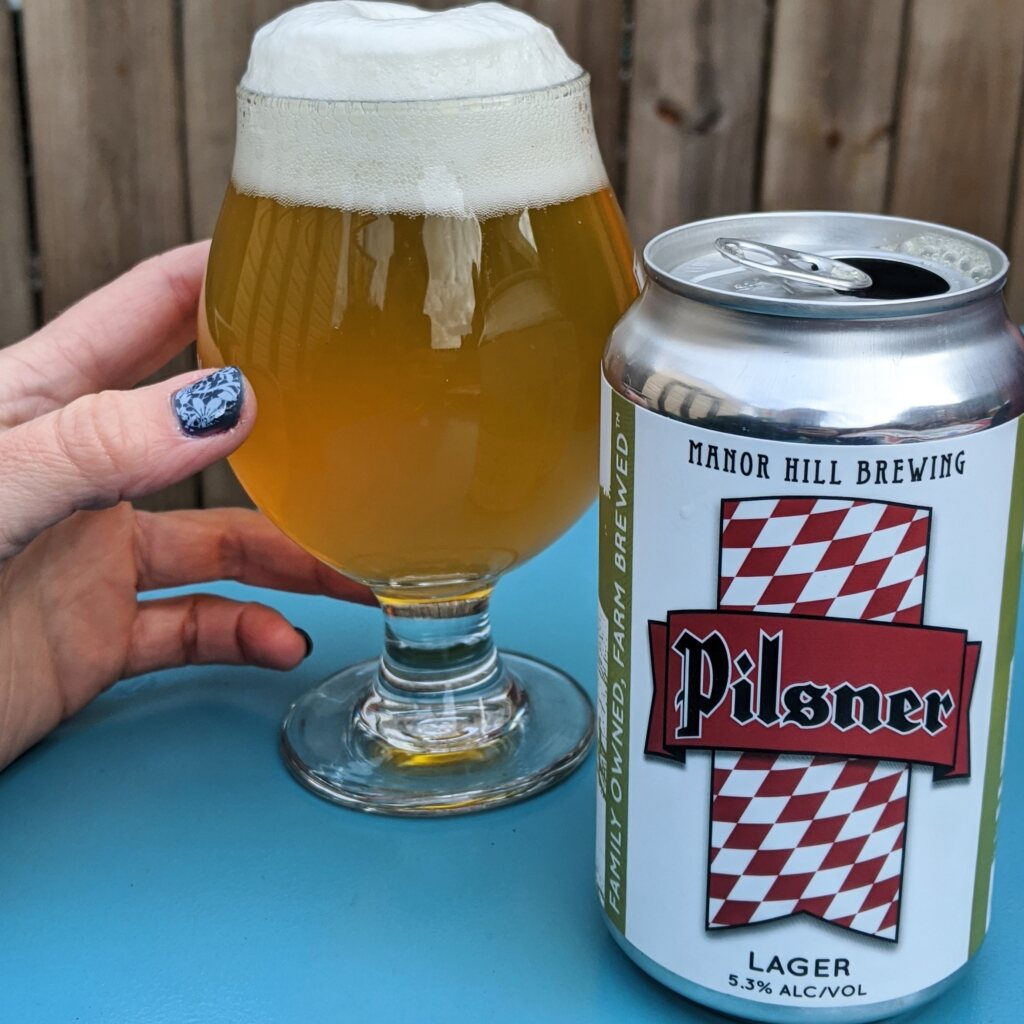
As we move into the Manor Lite and what makes it tick, I’m regaled with the water on the farm. It’s not as soft as Czech water, the “heavens water” that Plzen, Czech Republic, is known for is at the confluence of four rivers, so it makes sense it’s delicate enough to make baby formula right out of the tap.
As for delicate hopping, Eisenbarth and I discuss the nuanced bitterness found in his pale beers. It’s a challenge, one he’s been working on for his six years on the farm, having started there in 2020. His work on Manor Hill Pilsner has, to my palate, been a step in the right direction. And Manor Hill continues that trend with a beer I am most excited about: a corn lager, called 14 Acres, but it’s got all the hallmarks of German Helles and what the Czechs call “světlý ležák,” or pale lager.
The lager reminds me of some of the greatest hits out of Bavaria and Bohemia. Consider a beer like Augustiner-Brau Helles. It is so delightfully light, yet so full of flavor, it is easy to get caught up in it and forget that it’s getting warm. The paradox is, of course it is so easy to drink that you might cruise through a liter and when you get to the bottom feel as though you’ve only had 11.2 ounces, the size of the bottle the German Helles comes in.
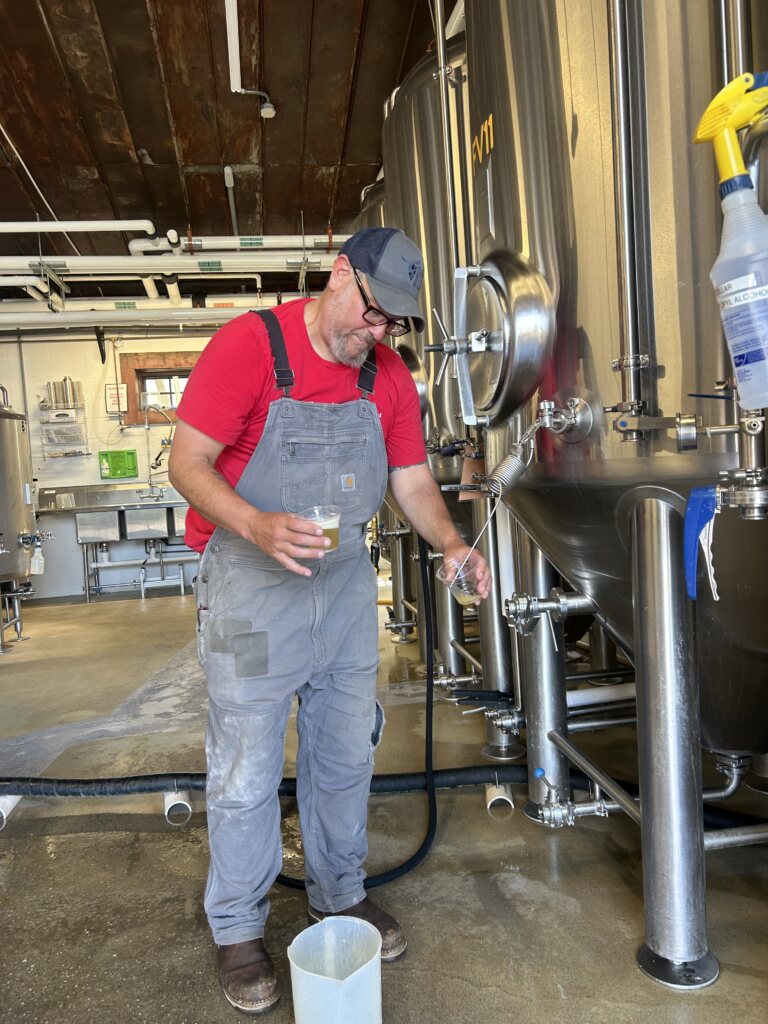
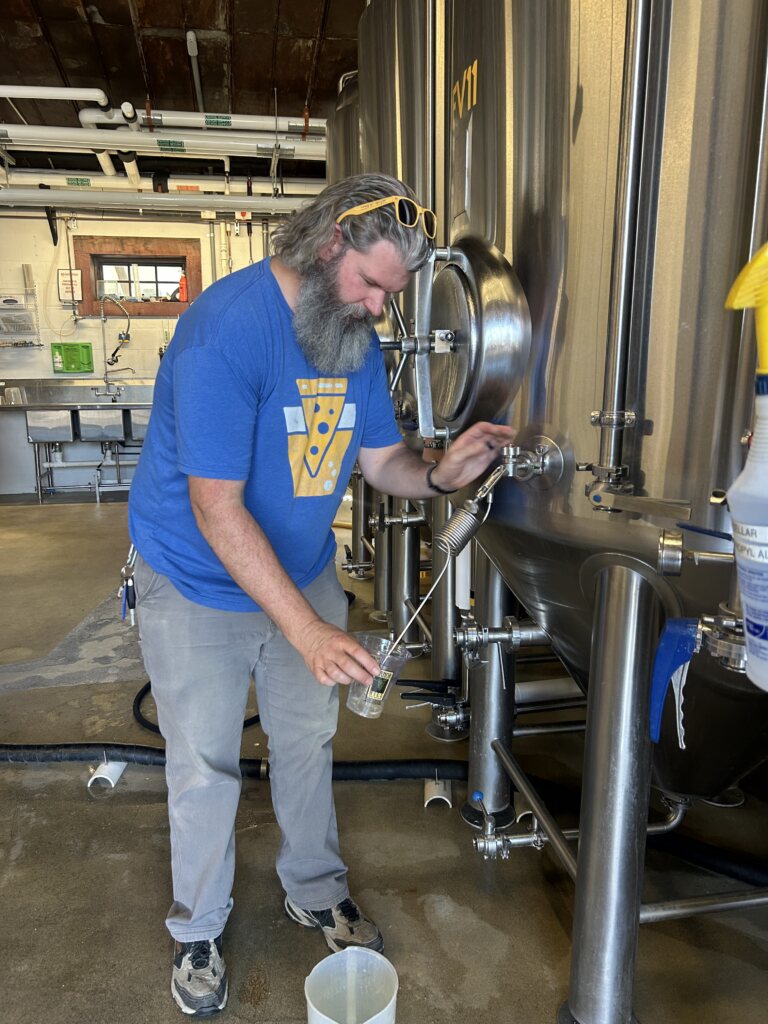
There is an electric hoppiness in the 14 Acres beer, both in the flavor and aroma. While the beer is not out yet, Miller put a pigtail on the tank, what is called zwickel, and took some samples from the fermentation vessel. While attaching the pigtail, Meg McBay was graining out the mash ton after the second batch of IPA left the kettle around 1:00pm. McBay had left the brewery for a little while to sell motorcycles. A couple years later, she is back. And I would argue that the lager I got to try coming out of Manor Hill was the best it’s ever been. It’s clear the success of the brewery is a team effort with each member playing a specialized role, but everyone overall being a heads up utility player in service of producing the best beer possible.
As we sample 14 Acres, the bitterness is quite mild, pleasant and enjoyable. Interestingly enough, it is hopped with Hallertau Blanc in the kettle, but it is a very light hopping, and very few, if any, of the Hallertau Blanc features come through. What is very perceivable in the final product is Tettnanger, that wonderful blend of spiciness and fruitiness, reminiscent of a freshly opened box of Fruity Pebbles, blended with the minty, matchsticky, peppery character often provided by Saaz hops.
Inside the brewery is a 15 barrel mash tun and the same size kettle. Past the canning line and the brewhouse, tanks fill out the cellar from 15 to 30 to 60 barrel capacity, with brite tanks also of varying capacities in addition to the fermentation cellar. The canning line is a CODI Manufacturing system. It is here that all cans currently on sale in DC, Maryland, and even a sprinkling into Delaware, are packaged. It is more interesting, however, to see the land that surrounds the brewery.
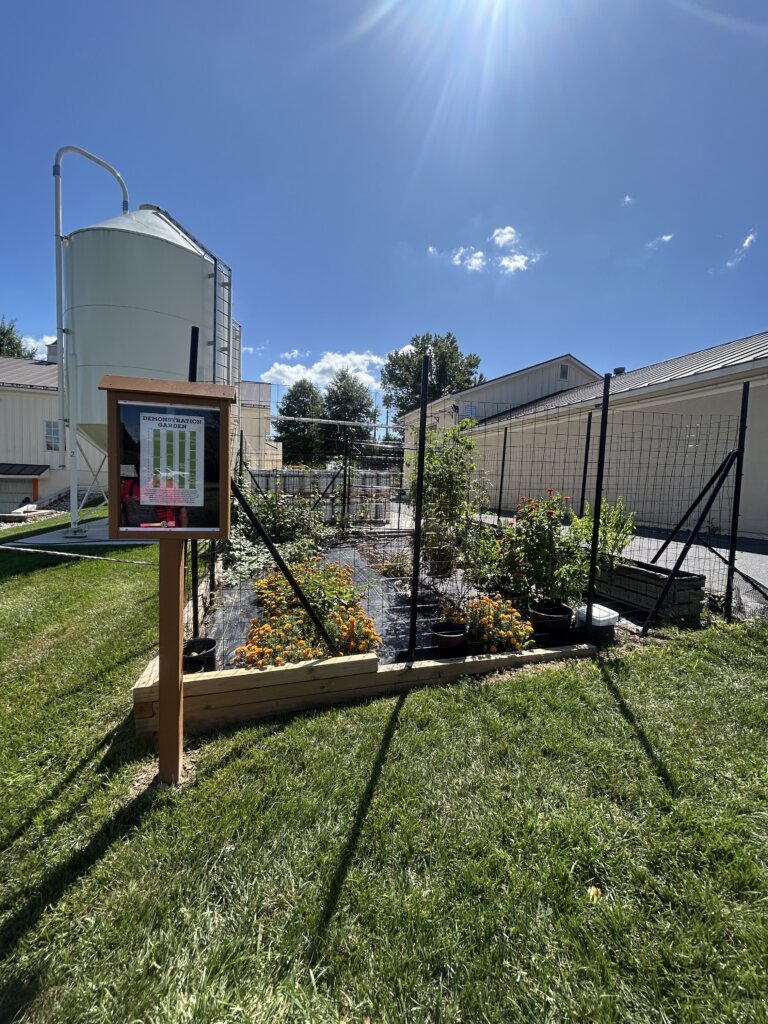
Walking the facility, a holistic picture of the comprehensive farm emerges. There’s some delightful fruit, vegetables, flowers, and herbs growing, including sweet potatoes, raspberries, blackberries, marigolds, zucchini, cucumbers, tomatoes (Orange Wellington, Purple Zebra, and Sun Sugar), pumpkins, peppers (Jalapeno, Poblano, and Bell), zinnias, celosia, lavender, strawberries, basil, verbena, lemon basil, and parsley, to name a few.
Corn grown on the farm goes into the corn silo. On the other side of the brewhouse, malt silos hold Pilsner malt. One silo is fully emptied before it is filled back up again. Just past the silos is the warehouse where more grain storage sits on the other side of the roller mills. The pale silo Pilsner malt goes into every batch except for Dunkel, which uses Munich malt, and Porter, which uses Marris Otter malt. Their Pumpkin Ale and Festbier, technically a Vienna lager, use Vienna malt.
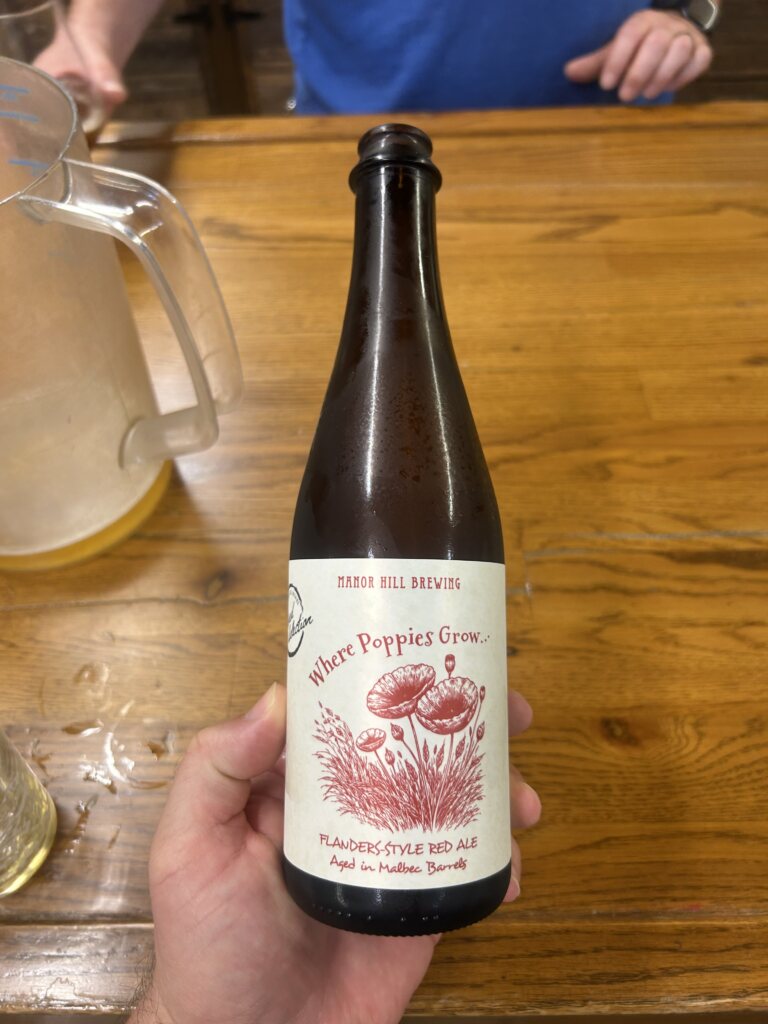
We end our tour in the taproom where 14 drafts grace the tap list and even more funky beers are on offer in bottles. IPA and Pilsner are their best sellers, you’re likely to see them around town, but on display on the board are more adventuresome things like fruited witbier, Shandy, Dunkel, and a saison called “Biere de Riesling” out of Sauternes casks with you guessed it, Traminer Riesling grapes. There’s also the wonderfully dry Festbier, hard seltzer, and hop water. Someone opens a bottle of a Flanders Red style beer, finished with honey.
Eisenbarth starts saying “all of our honey beer…” when McBay joins in asking, “wins medals?” And she’s telling the truth as they took home silver and gold medals in the National Honey Board’s 2026 Honey Beer Competition in the sour category.The sour beers come from casks that age in an entirely different barn, keep ing the wild yeasts and microorganisms away from the other larger-batch beers in stainless tanks in the primary cellar. There is a “mother” barrel, but the tart and funky beers coming out of the wine casks are truly unique. Taking anywhere from a year to five to fully mature, these beers are labors of love, conditioned with honey. The farm-grown corn is imperceivable in the Flanders Red style beer, “Where Poppies Grow.” But the work and effort that goes into the beer to make it so complex is completely evident in the first sip.
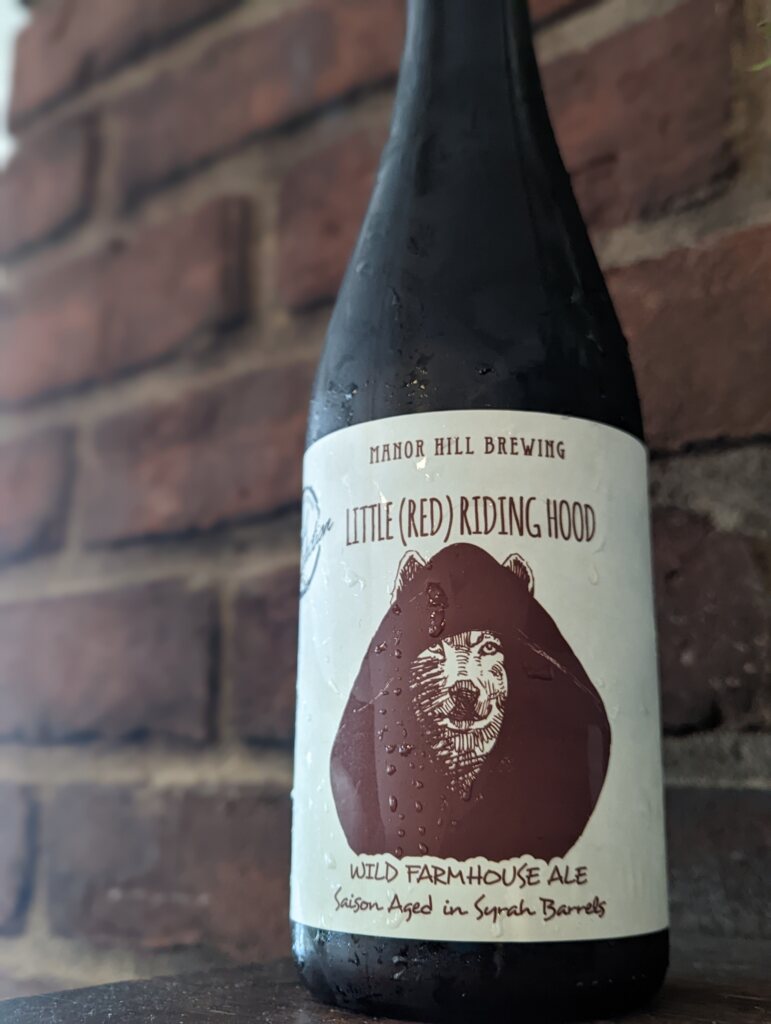
It reminds me of the famous Flemish Red Ale Rodenbach. While this beer is also complex, funky, and a nice balance of malt and acidity, it is also brewed with corn. A former Rodenbach brewer confirmed the beer has been using corn for some time but perhaps it is for more FAN, free amino nitrogen, purposes than tradition. And perhaps different amounts of corn depending on if a beer is going into foeders (giant wooden vessels from 140 barrels to 555 bbls). A corn processing facility is within walking distance of the Belgian brewery; the brewer said one time nobody answered the phone, so he just walked over to order his amount of corn for the next day’s brew.
In our world in which many farms seem to be experiencing increasing hardships, it’s nice to see a farm doing well. I won’t pretend to be objective, and my bias lies with the brewers on the farm making Manor Hill beer daily.