Per Congress, Juneteenth “celebrates the end of slavery in the United States. It is also known as Emancipation Day, Freedom Day, Jubilee Day, Juneteenth Independence Day, Black Independence Day, and, by statute, Juneteenth National Independence Day.” While the holiday has roots in 1865, it became a federal holiday on June 17, 2021.
With Juneteenth 2026 falling on Friday, June 19, we are energized for the grand opening of Urban Garden Brewing. UGB is a historic happening on its own: the first Black woman-owned brick and mortar brewery in DC’s 200+ year history. Somewhat fittingly, Washington, DC celebrated its 236th birthday at the start of the week on June 16 according to the Library of Congress. Of course, what is today DC was inhabited by native peoples for much longer than 236 years.
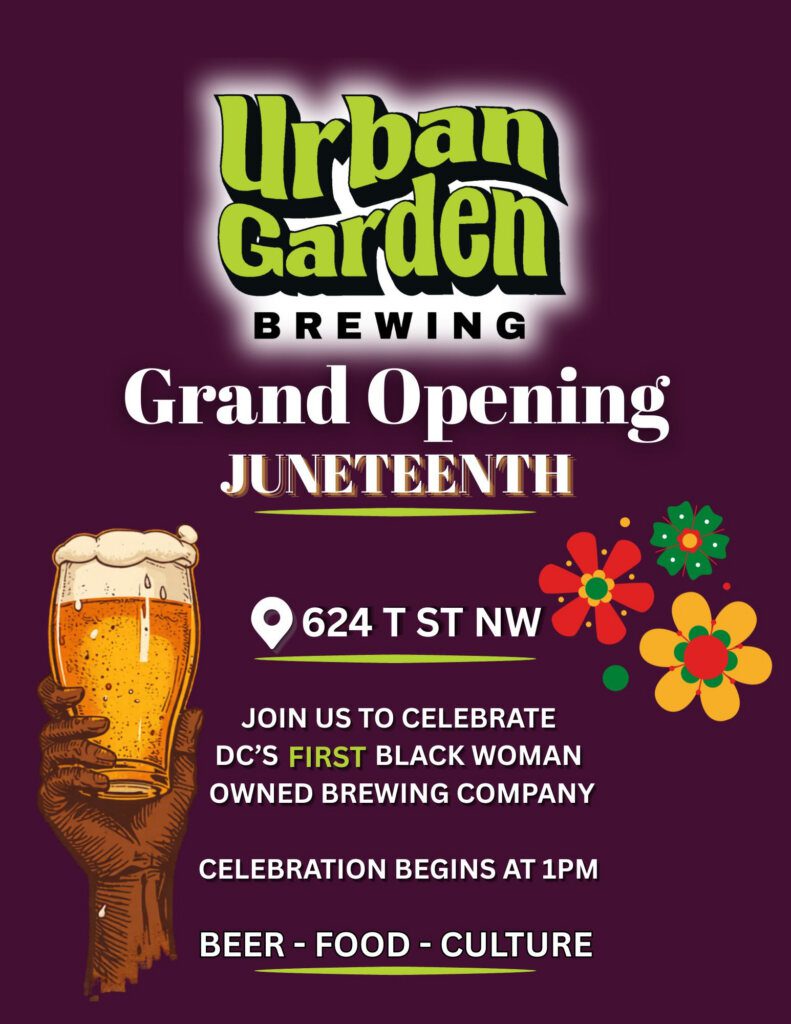
All of this to say we’re feeling very grateful on this Juneteenth, 2026, for all of the Black-owned breweries that we see today. Certainly UGB is the most recently opened; you should pay them a visit as they’ve worked tirelessly building out their concept which is literally next door to the historic Howard Theater and a block away from Eebee’s.
But the beer from other firms who have bolstered our community are worthy of digital ink too. I’m thinking of Soul Mega specifically, our other DC-based Black owned contract brewery. If you’re a fan of dark beer, Soul Mega’s Rhythm & Beauty black lager is worth seeking out.
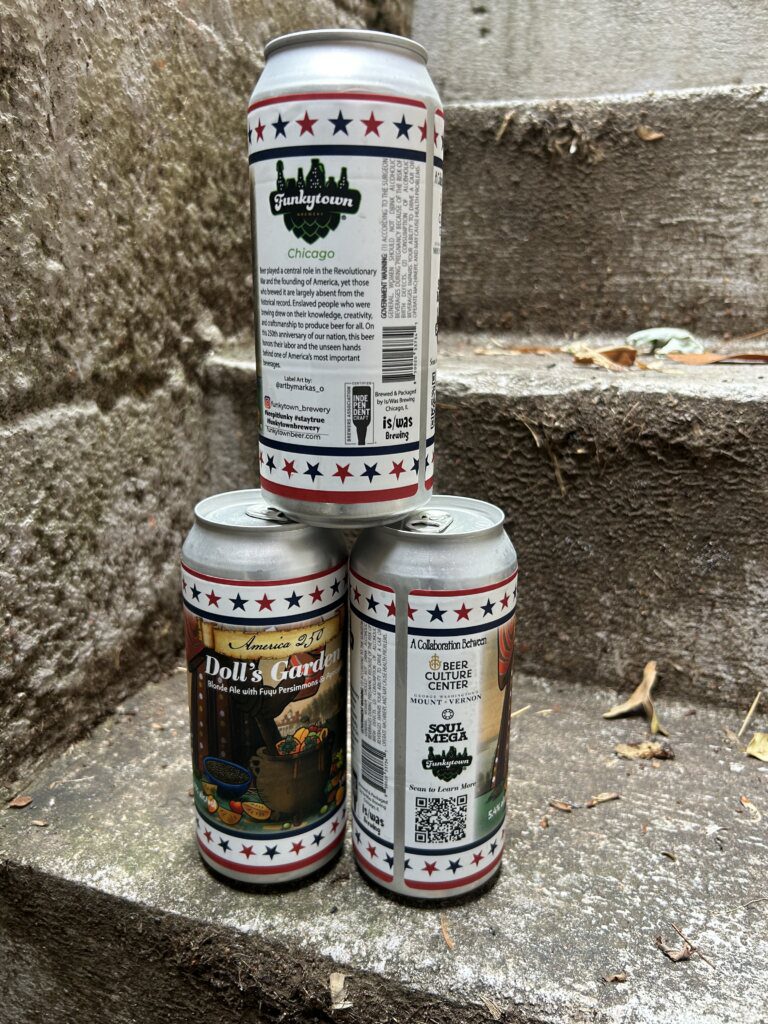
I was lucky enough to work with Chicago’s Funkytown Brewing alongside Soul Mega for a beer celebrating the Black brewers throughout America’s 250 years. This collaborative effort also featured George Washington’s Mount Vernon and Beer Culture Center. For the last five years, my beverage research firm, Lost Lagers, has been working with Dynasty Brewing Company, to produce beers for Mount Vernon.
One tidbit that I have learned over the last five years producing beers like Mount Vernon Virginia’s Porter, Mount Vernon Virginia’s Rye Cask Aged Porter, Rules of Civility #2 Spiced Wheat Ale, and Eliza Smith’s Strong Ale, are that the history we think is set in stone is often a draft until the next update comes along. Consider that bottles from the 18th century were just found at Mount Vernon, two summers ago. If not for an HVAC project would the world have ever known about these bottles full of preserved fruit? And who preserved the fruit in bottles? Nearly impossible to say, though we do know that with Mount Vernon’s Mansion Revitalization, physical evidence provided a key piece of American history: Black hands, labor, and insights gave priceless value to the first presidency in our early republic.
In a 1795 letter Martha Washington wrote to her niece that she was preparing for a return visit to Mount Vernon as the Washingtons were living in Philadelphia at the time. Martha requested fruit and told her niece that “should thair be any goosberry I should wish to have some bottled and some of the morelly cherrys dried – I should think old Doll cannot have forgot how to do them,” and so we know Martha knew the skills Doll possessed. Doll arrived at Mount Vernon with Martha in 1759 when she was 38. Doll and her children were brought to Mount Vernon as part of Martha’s “dower” or widow’s share of her first husband’s estate. Doll was in her 80s when Martha wrote to her niece in 1795, and she continued to use the kitchen to distill for medicinal purposes rose and mint waters.
More archaeological evidence has shown that persimmon seeds were the largest category of botanical materials amongst the House for Families at Mount Vernon. The House for Families was the main dwelling for enslaved people located at Washington’s Mansion House Farm. We also know that Lund Washington, George’s cousin, wrote to him in 1778, “I find from experience there is a fine spirit to be made from persimmons, but neglected to gather them for that purpose, only got some for the purpose of makeg Beer.”

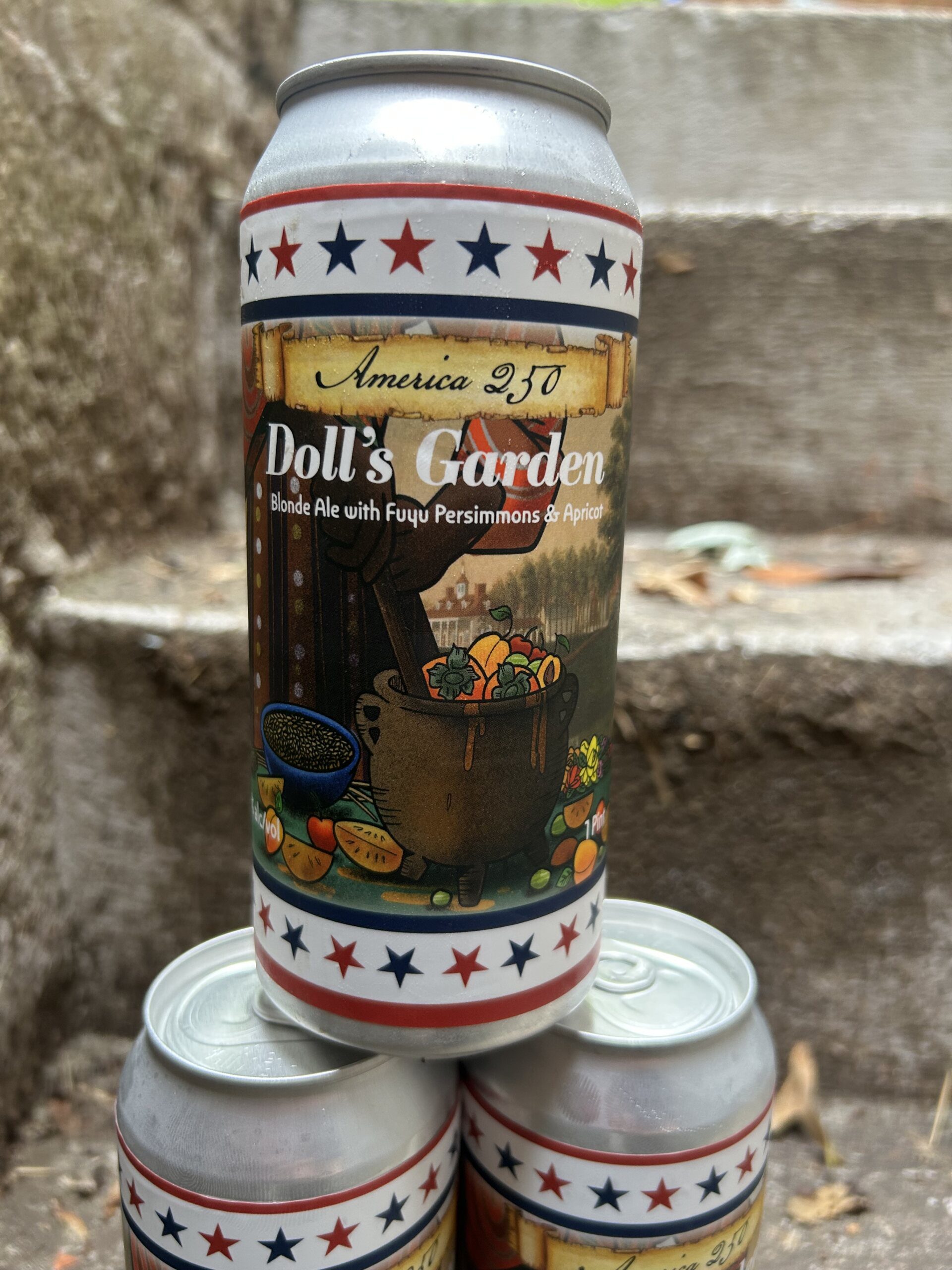
Chicago’s Funkytown, like UGB, will be opening its first brick and mortar brewery. Together, Funkytown and Soul Mega produced Doll’s Garden, a beer honoring those Black brewers who’ve been overlooked when it comes to early American beer history. The beer itself, a blonde ale with persimmon and apricot, is a testament to the skilled labor provided by Doll, an enslaved person at Mount Vernon. As Funkytown notes:
From the colonial period through the early republic, Black brewers, agricultural workers, cooks, and craftspeople played a central role in shaping American beer culture. Their knowledge of fermentation, preservation, ingredients, and technique was essential. Yet their contributions were rarely recorded with the same care as the people they labored for. What survives instead are fragments: letters, receipts, archaeological remains, and brief mentions in account books. Taken together, they tell a different story of American brewing, one built on skill, endurance, and uncredited expertise.
Coming back home to our DC Beer scene, I would be remiss not to mention that Black hands likely brewed George Washington’s commercial beer in what is likely the first commercial brewery in DC history.

Jumping back into the 21st century, just up the road from us, Liquid Intrusion Brewing Company, brews a marvelous cream ale, South of DC, that is a hit amongst those of us in the DC Beer community. While the brewery’s beer comes from Baltimore, we’ve found their beer readily available in DC on draft and in six packs. Also in Maryland is Black Viking Brewing. A brewery contracting the tasty Zingabier which we had cans of at our last DC Beer share at Henceforth on H Street.
If you can’t make it to UGB on Juneteenth, we highly recommend going when you have time. Get a beer. Get a cocktail or a similarly wonderful nonalcoholic beverage. The food is also delicious as we got to try a few bites during our stop in at the soft opening. UGB is a wonderful space and the culmination of the dreams of Eamoni Collier and her incredible team. See you on T street and happy Juneteenth.