It is an uncommon thing to own a blendery. Thanks to Blindhouse Beer, I now know two in Virginia. The first, Mieza Blendery, is just south of DC in Alexandria. We even wrote it up. There are only sixteen blenderies in Belgium, not counting the brewers who blend, too. With two in Virginia, that’s an eighth of the Belgian total. Progress!
Blindhouse beers were on tap at Andy’s Pizza and Churchkey in DC proper earlier this year. Chalk it up to the “Snallygaster effect,” that wonderful time of year where out-of-market beers trickle in thanks to the Snallygaster festival. We have Blindhouse not just because of Snally but thanks in large part to Allied Craft distributors. We’ve seen bottles at Dominion Beer and Wine in Falls Church, and Arrowine in Arlington, for example.
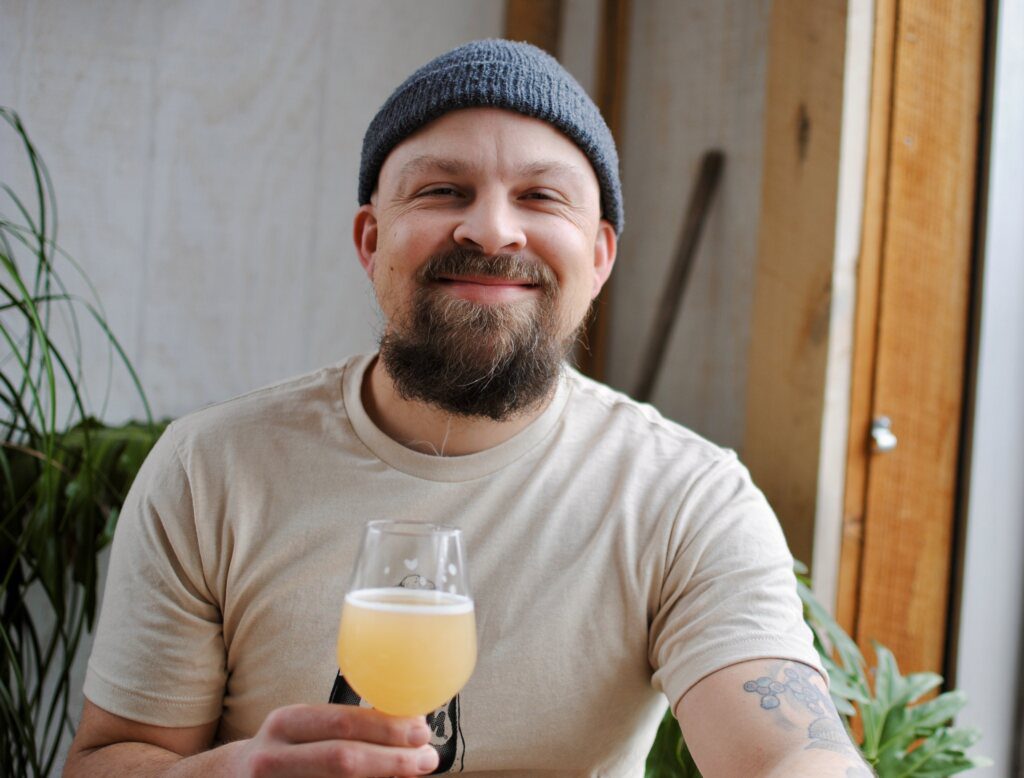
Blindhouse bottles are not cheap, but we’ve been impressed with the beer quality. A 500 mL bottle will run you $20-$30. In addition to the beer itself, we think it’s worth discussing the processes behind the beers and Blindhouse as they are quite unique in their production methods. Blindhouse owners Tyler Wert and Nicole Davidson-Wert operate out of Roanoke, Virginia. Wert was kind enough to answer some questions we asked.
The first question we asked was about wort production:
We produced wort at Lesser-Known [Brewing] for the first 9 months. We now produce at Golden Cactus Brewing which is just down the street from us.
We read via Edible that all your beers are open fermented. Is that true?
All of our beers go through an initial, “primary” open fermentation before being transferred to oak (with the exception of a small few that go into a closed, stainless tank). All of our oak are standard, 55 gallon neutral wine barrels at this point.
Can you tell us about your house culture?
Our house culture is a blend grown up from a classic Saison strain, likely Dupont or something similar. I honestly don’t know as I grew it up from dregs of an American-produced “clean” Saison. The other portion was foraged from flowers and some cedar growing on some family land in Callaway, VA, about 45 mins from Roanoke. In the year leading up to opening I went to the land and clipped various flowers, cedar leaves, red bud blossoms, etc… and made probably 12-15 starters with the clippings. From there a few were selected based on smell and grown up until a viable culture was built. This was blended with that classic Saison strain to create our house culture. I have never had it plated/analyzed. I suspect it is Brett positive but not sure! It generally provides some nice citrus and stone fruit aromatics with some subtle clove, orange peel and eucalyptus at times, depending on the beer and how the wort was treated.
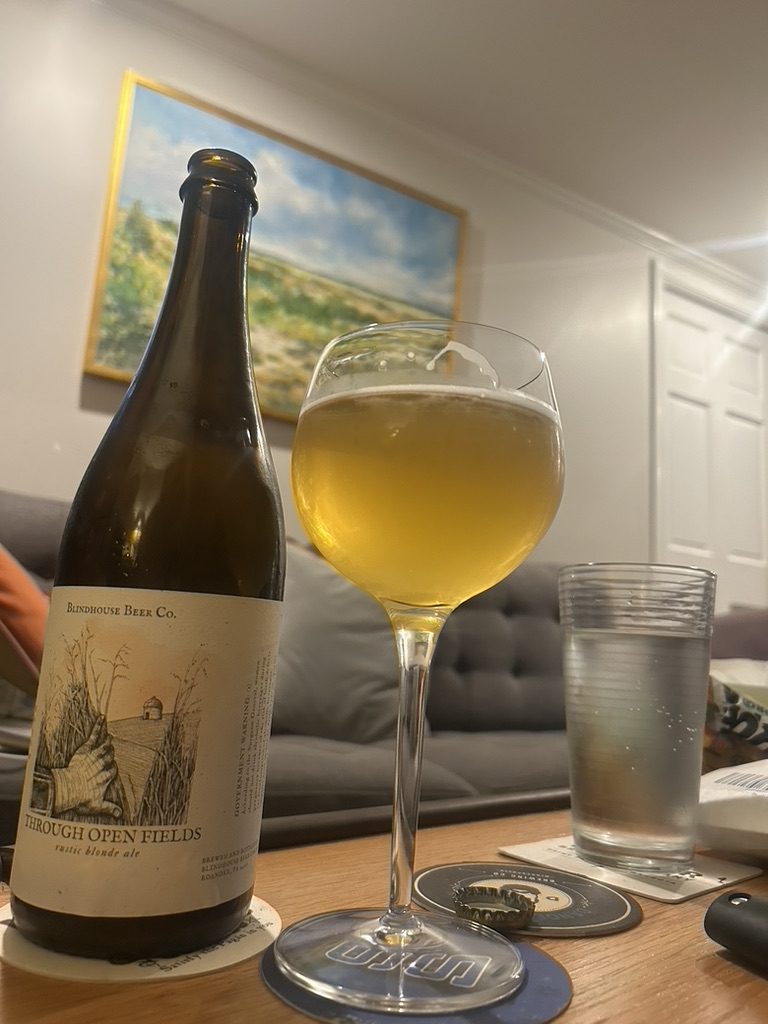
When I got a bottle of Through the Fields I noticed text on the label that said chill for 24 hours before serving. What’s up with that?
The chill for 24 hours is mostly for folks unfamiliar with natural bottle conditioning and high levels of carbonation. Just an effort to ensure the yeast is fully settled at the bottom of the bottle for easier decanting off of the yeast if desired, and less potential for “gushing” as the beers are typically high carbonation.
So how does the beer taste? Out of the three bottles I’ve tried there’s a nice range of funky, sour, tart, and acidic. All of these beers had very high levels of carbonation. Through Open Fields at 5.1% alcohol by volume was the liveliest of the three to my palate, with bubbles erupting out of the bottle when I opened it. Through Open Fields starts off as a “Keller beer of sorts,” but it certainly has the Walloon funk we’ve come to know and love, that leathery, pipe tobacco aroma you can pick out of a 12-18 month old Orval.
Starlight Wheat Saison has more bacteria-driven oak tannin and the dryness of the beer seems to increase the structure provided by neutral oak where the beer rested. The wheat does its best to maintain a palate fullness, but the bubbles and dry character of the beer–with very little or no residual sugar–reminds me of the first time I tried saison, having only ever consumed light lager before that. In the way that you may experience a “lupulin threshold shift” after having many hoppy beers, there’s almost a bacterial threshold shift in the Blindhouse beer. What was once sour, acidic, and in-your-face funky, becomes pleasant and inviting, a feature not a fault.
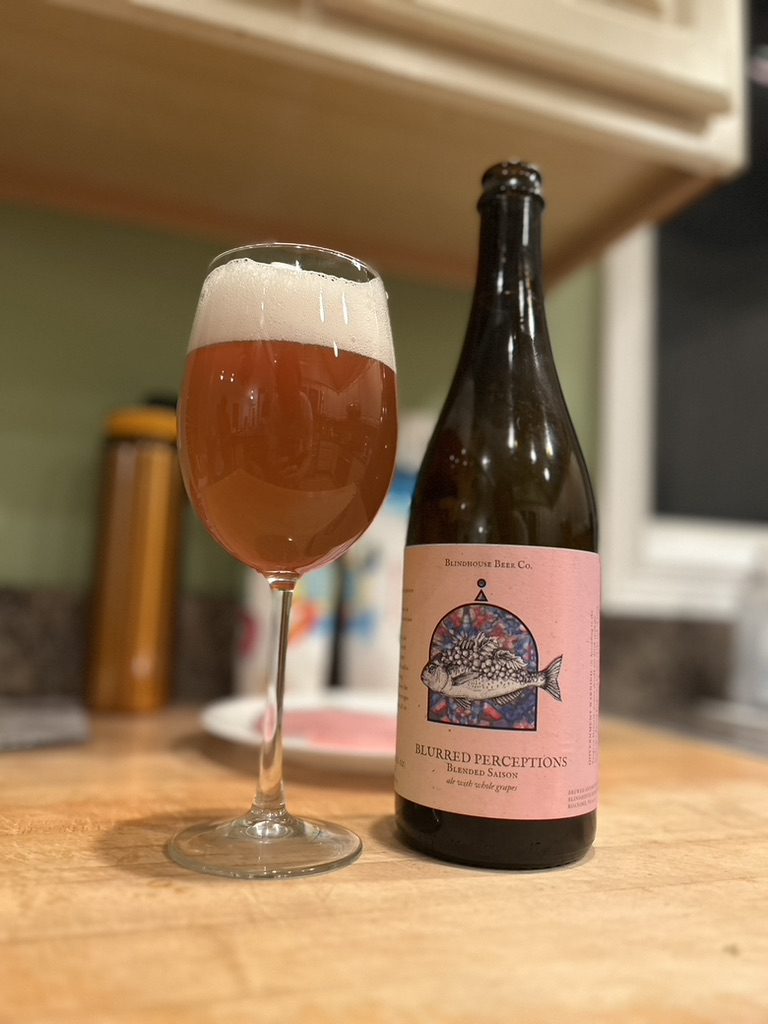
The final beer I tried was Blurred Perceptions, a blended saison ale with whole grapes. This beer did not gush upon opening, but holy guacamole was it carbonated! I picked up a pleasing grape cask mustiness. In addition to a jammy quality, the smell of raspberries and that musty raspberry skin character were also present in the glass. Despite the aromas of grape and raspberry, the resulting sip was not that fruit forward. There’s a lightness carried forward by the spritziness and the overall carbonation of the beer and they blend in harmony with the lemony acidity and the dryness of the oak. As Wert writes on the label, “a single exceptional barrel of pale Saison” makes this beer unique in addition to the Muscadine grapes from Ojai Farm in Franklin County, Virginia. At 5.88% it really does delight the palate and I’d encourage saison and grape-beer lovers to try.